

.jpg)
Winning in today's market isn't about working harder - it's about working smarter.
And it starts with competitive intelligence: understanding how your competitors are, what they’re doing right, and where you can outperform them.
Competitive analysis is one of the fastest ways to improve marketing performance.
When you understand how competitors attract traffic, position offers, and run campaigns, you can make smarter decisions without relying on guesswork.
But how do you do it effectively?
Platforms like Semrush and Panoramata are widely used by marketers. Semrush helps teams analyze SEO performance, search visibility, keywords, backlinks, and paid search activity.
But today’s competitive landscape goes beyond rankings and keywords.
Modern brands compete across:
- Paid social ads
- Email marketing
- SMS campaigns
- Landing pages
- Funnel flows
- Creative strategy
- Promotions and launches
That means search tools alone only show part of the picture.
In this guide, we’ll break down how Semrush supports competitive analysis, where it adds value, and where platforms like Panoramata give marketers a stronger competitive edge.
Let’s get into it.
Why Competitive Analysis Matters
Your competitors are constantly testing the market.
Every campaign reveals signals:
- Which offers they’re pushing
- Which channels they prioritize
- What messaging resonates
- Which products they promote most
- Where they’re investing budget
- How they adapt seasonally
The marketers who grow fastest don’t ignore these signals—they learn from them.
Competitive analysis helps reduce wasted spend, improve campaign ideas, and move faster with more confidence.
How to Use Semrush for Competitor Analysis?
Understanding your competitors isn't just helpful - it's essential.
Semrush makes this process faster and more insightful by turning raw data into clear strategic advantages.
Semrush provides only fresh live data for domain analytics, beyond surface-level stats.
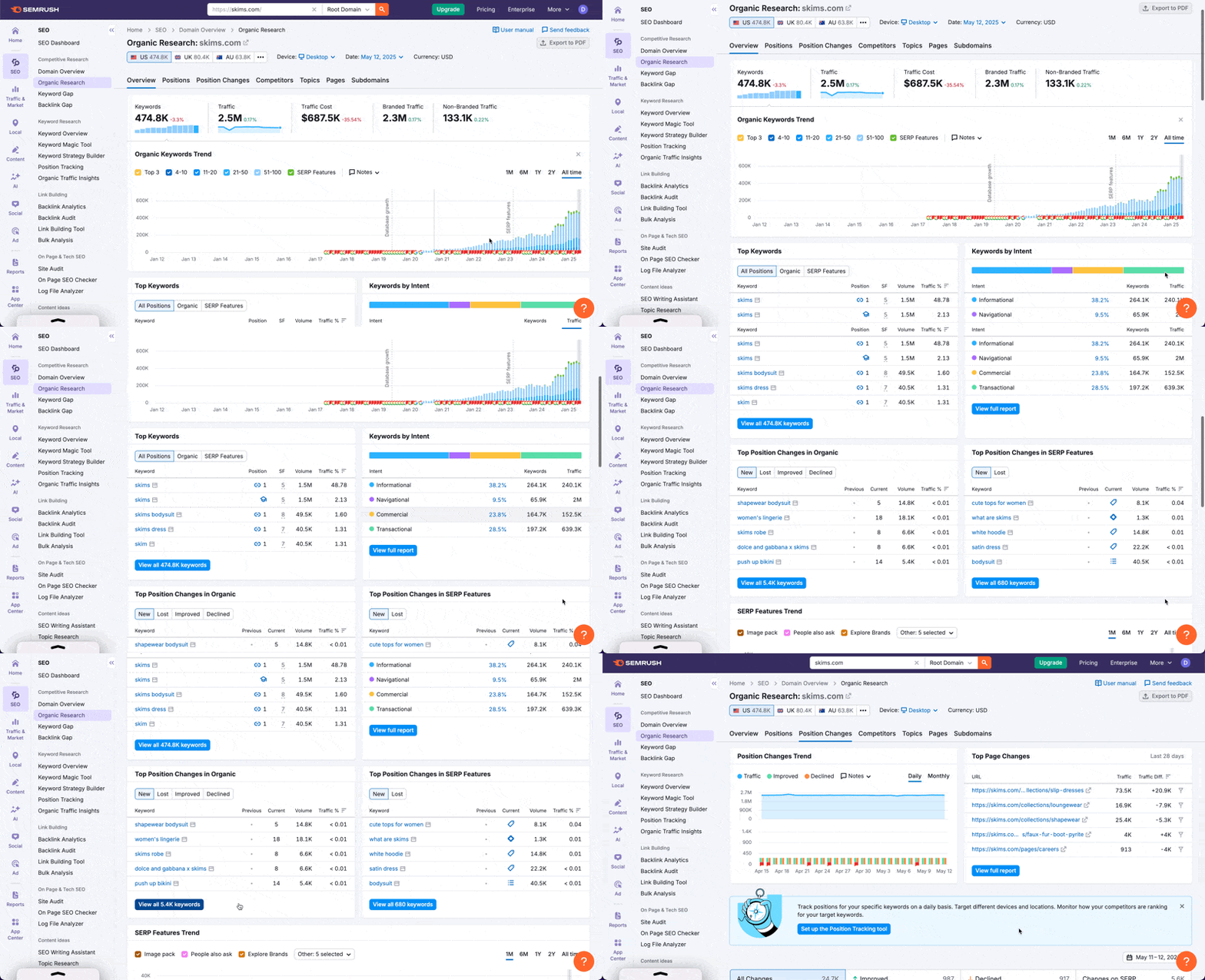
You get real-time visibility into competitors’ keywords, backlink profiles, search rankings, and traffic metrics — all essential for fine-tuning your SEO and PPC strategies.
Here's what competitive intelligence with Semrush can do for you:
- Identify market trends: Track what's working in your industry in real time, from trending keywords to high-performing content strategies.
- Identify gaps in your strategy: Compare your site to competitors and uncover missed content, targeting, and keyword coverage opportunities.
- Benchmark your performance: Use real data to understand your site's performance regarding search visibility, domain authority, and traffic share.
- Stay agile in a fast-moving market: Competitor movements often reflect larger shifts. Semrush's live tracking lets you adjust your strategy before others notice.
To maximize your competitive advantage, you can conduct a complete SEO competitor analysis with Semrush every 3 to 6 months.
This regular cadence will help you quickly identify changes in your market and adapt your strategy accordingly.
8 Competitive Analysis Methods with Semrush
Semrush simplifies your competitor analysis process by providing tools that deliver actionable insights.
Semrush is especially strong for search-focused research.
1. Organic Search Visibility
You can analyze:
- Competitor rankings
- Top-performing keywords
- Estimated traffic
- SERP movement
- Content gaps
This helps marketers understand where competitors win organically.
2. Backlink Intelligence
SEMrush provides backlink data that helps teams evaluate:
- Domain authority trends
- Referring domains
- Link opportunities
- Content promotion strategies
3. Paid Search Insights
For search advertisers, SEMrush can reveal:
- Paid keywords
- Search ad copy examples
- PPC competitors
- Keyword overlap
This is useful for search campaign planning.
Here are the 5 pillars you should look at once you kick off competitive research on Semrush:
- Domain Overview
- Market Explorer
- Traffic Analytics
- Competitor Paid Ads
- Keyword Gap
4. Domain Overview
The Domain Overview tool in Semrush provides a high-level snapshot of a competitor's online performance.
It provides critical data about their traffic metrics, top-performing keywords, backlink profiles, and even paid advertising strategies.

This feature is handy when quickly identifying the key players in your niche or prioritizing which competitors to analyze more deeply.
One of its main strengths is its speed and simplicity. With just a few clicks, you can gain a broad understanding of a competitor's presence and identify areas where they excel.
However, the tool is best suited for prioritization rather than detailed strategy building, as it focuses more on overviews than granular data.

For example, if you're preparing to launch a new product, Domain Overview can help you identify the market's dominant competitors and assess their strengths and weaknesses.
5. Market Explorer
Semrush's Market Explorer makes this process easier by giving you a detailed market overview and identifying your main competitors.
To use this tool, enter your domain in the "Find Competitors" section.
For example, entering "adidas.com" will generate a list of other major players in the vacation rental market, like Nike and Puma.
This is a quick way to see which brands are competing for the same audience as you.

The Overview tab gives you a big-picture view of the competitive landscape.
It highlights market share, audience size, and growth rate metrics.
This is incredibly helpful for understanding your closest competitors and how they compare to you:
- Are they growing faster?
- Do they have larger audiences?

These insights help you focus your efforts where they're needed most.
One of the standout features of Market Explorer is the Growth Quadrant widget. It categorizes competitors into four groups:
- Niche Players: Smaller or newer brands with slower growth.
- Game Changers: Emerging companies that are growing rapidly but with smaller audiences.
- Established Players: Well-known brands with large, stable audiences.
- Leaders: Industry giants with both large audiences and rapid growth.

Traffic represents the total number of visits, and traffic growth reflects the rate at which the competitors being researched are expanding within the market.
This breakdown is essential because it helps you see where your competitors stand about your business.
For example, if you're in the Game Changer category, you can focus on competing with others in your quadrant or strategize how to move into the Leader category.
Market Explorer also helps you compare audience and traffic growth between competitors.

If a competitor's audience is growing faster, it could indicate trends or opportunities you're missing.
For example, they may succeed in a particular demographic or channel, such as social media or paid advertising, that you still need to exploit fully.
In short, Market Explorer is about more than finding out who your competitors are.
It's about understanding their position in the market, how they're growing, and what you can do to stay competitive in the long term.
6. Traffic Analytics
Traffic Analytics breaks down a competitor's website traffic sources, including organic, paid, social, referral, and direct channels.
This tool goes beyond surface-level data to provide insights into audience behavior, engagement metrics, and acquisition trends.

It's conducive for businesses looking to understand where competitors generate the most value and how their traffic sources compare.
One of the key benefits of traffic analytics is its ability to guide your marketing investments.

You can allocate your budget more effectively by identifying which channels drive the most traffic for competitors.
However, the data is based on estimates, which may be less accurate for smaller competitors or niche markets.
7. Competitor Paid Ads
The Competitor Paid Ads tool might be a game-changer if you're ready to invest in paid advertising.
This feature analyzes your competitors' advertising strategies, revealing their ad copy, targeted keywords, and estimated budgets.

By understanding what works for them, you can refine your PPC campaigns and avoid costly trial and error.
This feature's strength lies in providing actionable insights into your competitors' paid campaigns, including which ad copies they sent over time.
By analyzing their successful ad copy, you can create campaigns that resonate with similar audiences and ensure your budget is spent effectively.
8. Keyword Gap
Let’s not forget about SEO. This is where Semrush shows its dominance.
Keyword Gap Analysis is one of the most effective ways to uncover opportunities to improve your SEO strategy.
This tool compares the keywords for which your website ranks with your competitors and identifies gaps you can target to increase your organic traffic.

The value of Keyword Gap lies in its ability to reveal content opportunities you may have missed.
For example, if a competitor ranks for high-volume keywords you're not targeting, the tool will highlight these gaps so you can prioritize them in your content strategy.

However, given the volume of data it offers, filtering and prioritizing relevant keywords is essential to avoid getting overwhelmed.
So, take your time and merge it with your keyword research to ensure you capture all potential and practical keywords.
Limitations of Using Semrush For Competitive Analysis
Semrush is a powerful tool for competitive analysis, but like any tool, it has its limitations.
And, before we get to its downsides, let us clarify one thing:
Is this the data you look forward to learning about your competitors, or are you looking for more?
Because if you don’t know what you need by doing your competitive analysis, then this can be a good start.
However, let’s face it—other valuable and practical data might affect your strategy and push you to more vigorous competition.
While Semrush excels at providing broad overviews and actionable data, you may need more than what you get in certain areas.
When Semrush & Search Tools Falls Short
If your company operates in niche markets or targets smaller competitors, Semrush's capabilities may be insufficient.
There may be several main issues users face as data accuracy and tracking niche competitors:
Data accuracy for smaller players
Semrush relies on estimation models to generate traffic and performance data.
This works well for large brands with significant visibility but can result in incomplete or inaccurate data for smaller competitors.
Track niche competitors
Semrush often focuses on larger, more prominent competitors in mainstream industries.
If your market is niche or localized, you may struggle to gather actionable insights on smaller competitors operating in the same space.

This can leave critical blind spots in your analysis.
These limitations can be frustrating for businesses that need to understand their competitors' specific strategies to refine their approach.
Without accurate or detailed data, it becomes tricky to:
- Identify growth opportunities in underserved markets.
- Benchmark performance against niche competitors.
- Tailor your strategy to specific audience segments.
If your business relies on granular insights or operates in a specialized area, you should check out Panoramata.
Also, search data matters—but modern marketing happens across many more channels.
Most brands are not growing through SEO alone.
They’re growing through:
- Meta ads
- TikTok creative
- Lifecycle email flows
- SMS promotions
- Landing page testing
- Retargeting funnels
- Seasonal campaign launches
This is where traditional SEO tools become limited.
They can show where traffic may come from—but not how brands convert that traffic once it arrives.
Where Marketers Need More Than SEMrush
1. Competitor Emails
Search tools don’t show:
- Welcome sequences
- Promotional emails
- Product launches
- Subject line strategy
- Send frequency trends
These are often some of the highest-performing revenue channels for ecommerce brands.
2. Paid Social Creative
Keyword tools don’t reveal:
- Meta ad creative trends
- TikTok campaign hooks
- UGC ad formats
- Offer angles
- Visual messaging patterns
3. Funnel Visibility
Marketers need to understand the full customer journey:
Ad → Landing Page → Offer → Email Flow → Checkout → Retention
That level of visibility requires broader competitive intelligence.
Panoramata: Semrush Alternative for Smarter Competitive Analysis
You decide to carry out a competitive analysis. You want to know more than just traffic and engagement figures.
If so, Panoramata is an excellent alternative to Semrush.
If your company operates in niche markets or targets smaller competitors, Semrush's capabilities may be insufficient.
Unlike Semrush, Panoramata takes a multichannel approach, giving you insight into your competitors' emails, ads, SMS, social media, and landing pages in one place.
This makes it a game changer for businesses that want to stay informed and adapt their strategies in real-time.
Panoramata gives marketers visibility into what SEMrush doesn’t focus on.
With Panoramata, teams can monitor competitor:
- Emails
- Ads across channels
- Landing pages
- Funnels
- SMS campaigns
- Promotions
- Creative strategy shifts
Instead of just knowing who ranks, you know how competitors are selling.
That’s often the more valuable insight.
1. Stay Updated On Your Competitors Without Hassle
Forget about subscribing to competitors' newsletters or manually checking their websites.
Panoramata tracks their updates for you - whether it's a new email campaign, a landing page redesign, or a new ad on TikTok.

Real-time alerts keep you one step ahead, and the searchable database of over 20 million assets allows you to find what you need in seconds.
2. See What’s Driving Conversions
Panoramata doesn't just show you what the competition is doing. It digs deeper to show you how they're improving conversions.

You can monitor changes to their landing pages—such as updated calls to action, new product placements, or seasonal promotions—and use these insights to refine your own strategies.
3. Look Beyond Just One Channel
Most tools focus on one piece of the puzzle or go too global.

Panoramata covers:
- Ads: See what your competitors do on platforms like Meta, Pinterest, and TikTok. Historical data lets you see how they've evolved their messaging over time.
- Landing pages: See how competitors update their visuals, headlines, or layouts to increase clicks and signups.
- Emai and SMS campaigns: See what types of texts resonate - are they offering discounts or exclusive offers?
4. Plan For Peak Seasons
Seasonal campaigns are crucial for many businesses, but it can be challenging to stand out.
Panoramata's curated collections showcase the most successful campaigns from significant sales events such as Black Friday and Christmas.
Instead of starting from scratch, take inspiration from real examples that worked.
Final Thoughts: Which is the Best Tool for Competitive Analysis
The smartest teams often use both:
- SEMrush for search opportunity analysis
- Panoramata for real-time competitor marketing intelligence
Is SEMrush Good for Competitive Analysis?
Yes—especially for search-focused competitive research.
If your goal is rankings, backlinks, keyword gaps, and paid search insights, Semrush remains a strong platform.
But if you want to understand:
- What competitors are emailing
- Which ads they’re launching
- How funnels are built
- Which offers they’re testing
- How campaigns evolve weekly
Then you need broader visibility.
Different Jobs, Better Together
That’s where Panoramata gives marketers their edge.
While tools like Semrush provide valid numbers and statistics for competitive analysis, Panoramata offers real-time updates and a complete multichannel view of your competitors' strategies.
For example:
- Are your competitors updating their landing pages with better calls to action?
Panoramata lets you see what they changed and how it affected their conversions so you can test similar tweaks.
- Are they running new seasonal ad campaigns?
Panoramata gives you insight into the visuals and messaging they're using so you can create better campaigns of your own.
- Do you struggle to compete with bigger players?
Panoramata's benchmarks let you focus on the areas where you can make the most impact.
It's not about data for data's sake - it's about helping you grow smarter, faster, and more efficiently.
Search rankings only tell part of the story.
See competitor emails, ads, landing pages, and funnels in one place with Panoramata.
Frequently Asked Questions
What makes Semrush a good tool for competitive analysis?
Semrush offers a wide range of features, including keyword research, backlink analysis, and insights into competitors’ traffic and ad strategies. It’s especially effective for SEO and PPC-focused competitor tracking.
What are the limitations of using Semrush?
Semrush can be overwhelming for beginners and is relatively expensive for small businesses. Additionally, it focuses more on digital marketing metrics, which may not cover broader competitive insights like email or SMS tracking.
Why is Panoramata a recommended alternative to Semrush?
Panoramata provides real-time competitor monitoring across multiple channels, including emails, ads, websites, and tech stacks. Its benchmarking features and comprehensive and updated database of marketing assets and creatives make it ideal for brands needing a comprehensive view of competitors’ strategies.


