

.png)
.png)
Looking for ideas for your April newsletters? Still wondering what events you should or shouldn’t put into your calendar to engage your mailing list?
April is more than just about April Fools and the post-Easter lull. You also have Stress Awareness Month, World Health Day, National Pet Day, and many more.
The brands that recognize April's unique character—balancing lighthearted moments with meaningful causes, addressing subscriber wellbeing alongside commercial goals, and demonstrating values through action—build relationships that compound throughout the year.
In this guide, you'll discover how to make April the month your brand stands out while competitors blend into spring monotony.
Let's turn April's underestimated potential into your breakout moment.
Main email marketing opportunities in April
April Fools' Day (April 1)
April Fools' Day is a high-risk, high-reward opportunity.
There’s potential for viral success and memorable brand moments, but also an equal potential for backlash, offense, and reputational damage.
As consumers increasingly expect and distrust April 1st content, effectiveness has declined. Yet when executed well, April Fools' campaigns can show your brand’s personality that can pay dividends in the coming months.

Who should and shouldn’t participate in April Fools’ email campaigns?
First, the good candidates for an April Fools newsletter are:
- Brands with established playful, humorous voice demonstrated consistently throughout the year
- Industries where lightheartedness is expected, like entertainment, food, or consumer products
- B2C brands with younger, digitally-native audiences comfortable with internet humor culture
- Companies with track records of successful humorous content showing they understand their audience's humor preferences.
These industries should probably skip April 1st content:
- Healthcare, financial services, and legal industries (April 1st jokes undermine credibility)
- B2B enterprise software (unless brand voice is exceptionally casual)
- Brands in crisis or reputation recovery mode (humor reads as tone-deaf)
- Companies lacking creative resources for strong execution (since mediocre April Fools' content is worse than none)
To pull off an April Fools’ campaign, originality matters tremendously. We’ve seen so many overdone jokes, fake company acquisitions, and tasteless pranks.
Remember, you're participating in April Fools', not trying to genuinely fool people, which damages trust.
Provide payoff by rewarding people who engaged with your April Fools' content through actual value, entertainment, or exclusive access.
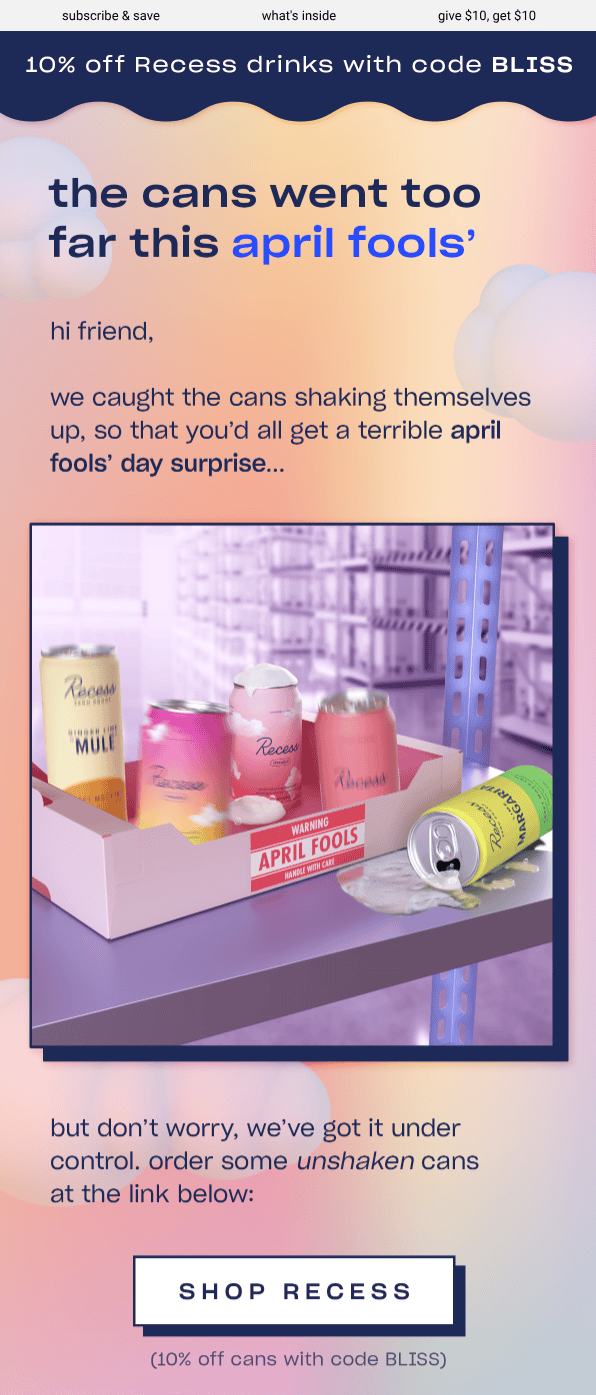
And ensure brand alignment—humor must fit your established voice and values rather than feeling forced or out of character.
Some brands also do an Anti-April Fools’ newsletter where they explicitly opt out: "No jokes, just real value today" campaigns.
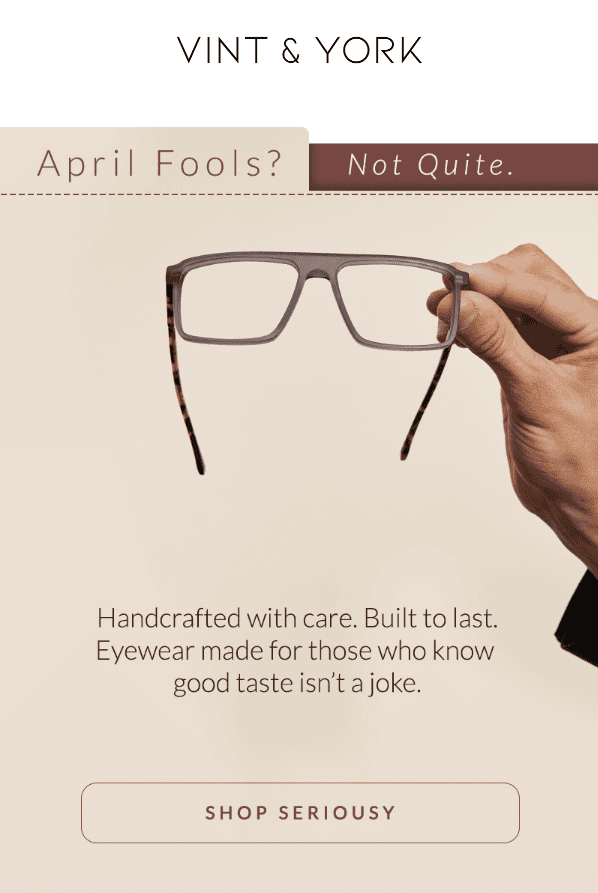
This approach can differentiate your brand effectively while avoiding April Fools' risks entirely. You use the attention and conversation around April Fools' without participating directly.
Stress Awareness Month
April is Stress Awareness Month, and the timing couldn't be more strategic.
Your subscribers are navigating tax season aftermath, Q1 performance reviews, and the accelerating pace of business as the year gains momentum.

Before launching any Stress Awareness campaign, honestly assess your brand's positioning.
Wellness marketing has become so saturated that subscribers instantly recognize exploitative messaging. Determine whether you can provide genuine value.
Brands with authentic wellness connections—health services, fitness companies, mental health apps, workplace productivity tools—are better able to address stress directly.
But even brands without obvious wellness ties can participate in Stress Awareness Month by focusing on how their products or services legitimately reduce stress, as long as the connection to health isn’t forced.
These are examples of this concept at play.
- It’s true that a meal delivery service reduces decision fatigue and cooking stress.
- A financial planning app genuinely addresses money-related anxiety.
- A project management platform legitimately decreases workplace chaos.
The key is honesty: if your product doesn't meaningfully impact stress, focus on providing valuable stress-management content without forcing your product into your newsletter.

The best approach is publishing educational content because your mailing list genuinely wants help, not just performative sympathy.
Create guides that cover stress management techniques backed by research such as deep breathing exercises, time management techniques, and boundary setting strategies. Partner with mental health professionals for more credibility and depth in your newsletter.
Educational content also works for B2B brands. Focus on workplace stress content geared towards manager and HR teams.
Share how stress affects productivity, retention, and creativity. Recommend actionable steps for reducing team stress.
By doing this, you position your brand as a thought leader while addressing the real pain points of your audience.
During the month, you can also use a community support framework by creating spaces for subscribers to connect with others and share their experiences.
Host Q and A forums, live virtual wellness events (yoga, meditation), or stress-management challenges where participants can support each other and share milestones.
The bottom line is that a brand should never exploit stress for sales. Provide genuine value first.
Earth Day (April 22)
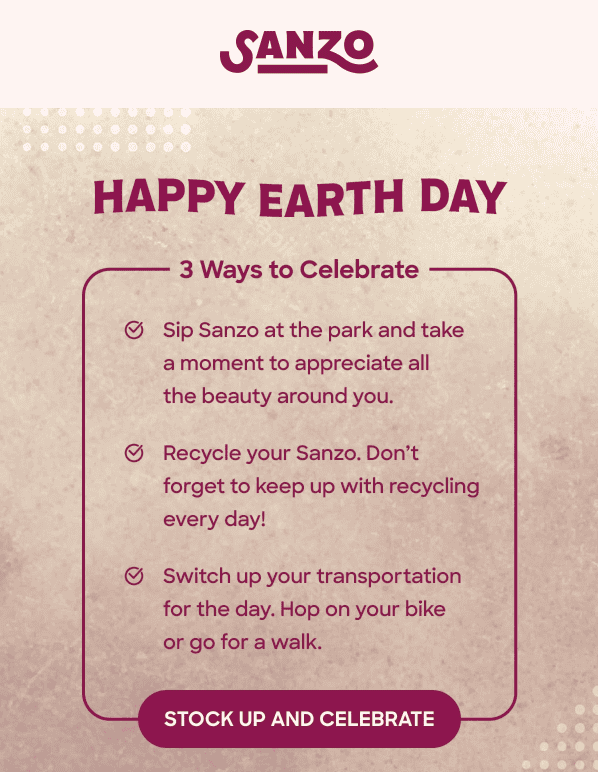
Earth Day is one of the best opportunities of the year to differentiate yourself as a brand that values environmental responsibility.
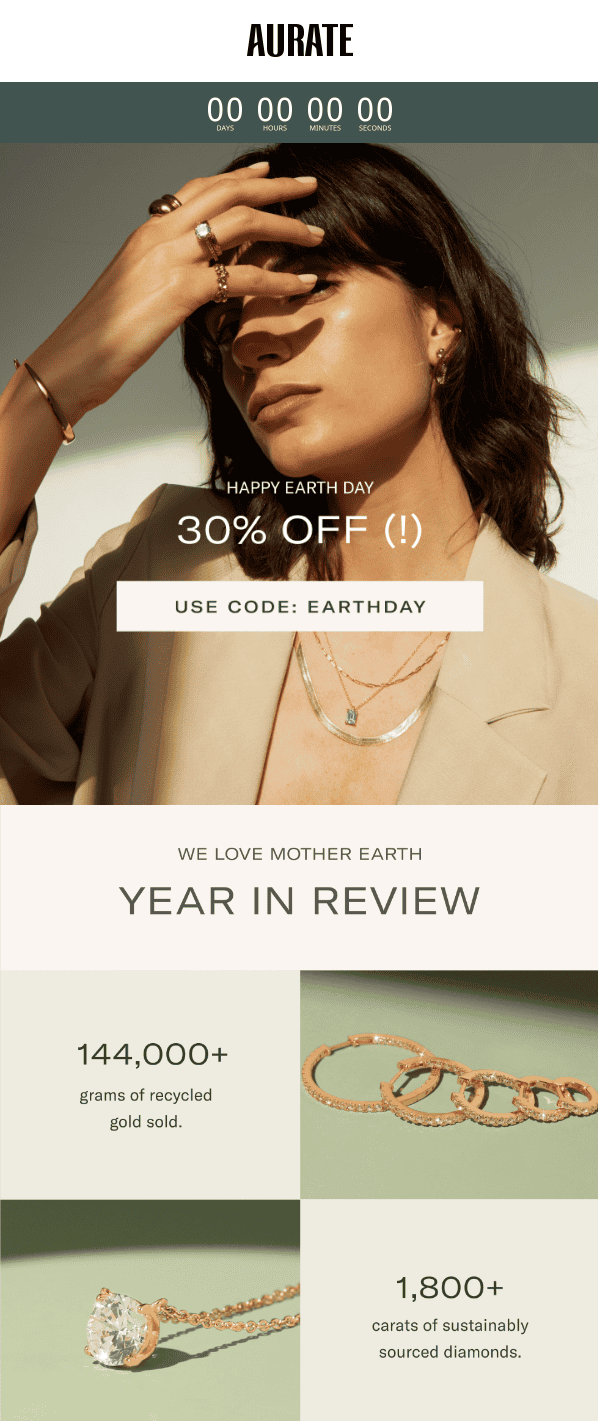
It’s been shown that millennial and Gen Z audiences, who are growing in purchasing power, are drawn to brands that speak out about environmental issues.
However, there’s also the very real risk of receiving greenwashing accusations. Brands that are performative in their values face backlash.
Therefore, it pays to perform an audit of your brand before launching an Earth Day newsletter.
Does your brand have genuine, measurable environmental initiatives beyond Earth Day?
Can you provide specific data about environmental impact rather than vague claims?
Is sustainability integrated into year-round operations or just April marketing?
If you answer "no" to these questions, you can explore other options.
- Amplify environmental organizations and causes without centering your brand.
- Share educational content about environmental issues relevant to your industry.
- Acknowledge your sector's environmental challenges while committing to genuine improvement starting now.
However, don’t pretend to environmental leadership you haven't earned.
Brands that are performative in their values face backlash. Therefore, it pays to perform an audit of your brand before launching an Earth Day newsletter.
Other campaign ideas and approaches to try for Earth Day:
- Share impact reports of your environmental track records (if you have them). Feature specific sustainability metrics: carbon footprint reductions with year-over-year data, supply chain sustainability improvements with third-party verification, packaging waste reductions with before-and-after numbers, or renewable energy adoption percentages.
- Share goals and acknowledge gaps. Ex. "We've reduced packaging waste 40% since 2022, but we're still working to eliminate single-use plastics completely by 2026"
- Create content explaining climate change impacts specific to your industry, sustainable practices your sector should adopt, consumer education about environmental choices in your category, or resources for living more sustainably.
- Highlight specific sustainable product lines with clear explanations of what makes them environmentally preferable—recycled materials percentages, carbon-neutral shipping specifics, circular economy initiatives like repair or resale programs, or sustainable packaging innovations.
- Announce collaborations with environmental nonprofits with specific donation amounts or volunteer commitments.
- Support environmental policy through advocacy campaigns.
- Sponsor local environmental initiatives like park cleanups or habitat restoration.
Fashion and apparel brands should focus on sustainable materials with specific sourcing information, circular fashion initiatives including repair services and resale programs, transparent supply chain labor and environmental practices, and clothing longevity versus fast fashion disposability.
Food and beverage companies can highlight local sourcing that reduces transportation emissions, regenerative agriculture practices that restore soil health, food waste reduction with specific diversion percentages, and sustainable packaging transitions with clear timelines.
Technology brands should address e-waste recycling programs with take-back details, energy efficiency improvements with measurable data, device longevity and repairability versus planned obsolescence, and data center renewable energy adoption.
B2B and SaaS companies can showcase paperless operations impact, remote work's environmental benefits with carbon calculations, and sustainable business practice guides for clients.
National Pet Day (April 11)
Tap into pet passion with a National Pet Day newsletter. This special day might seem niche, but it’s a profitable one given that the US pet industry exceeds $136 billion annually, with 67% of households owning pets.
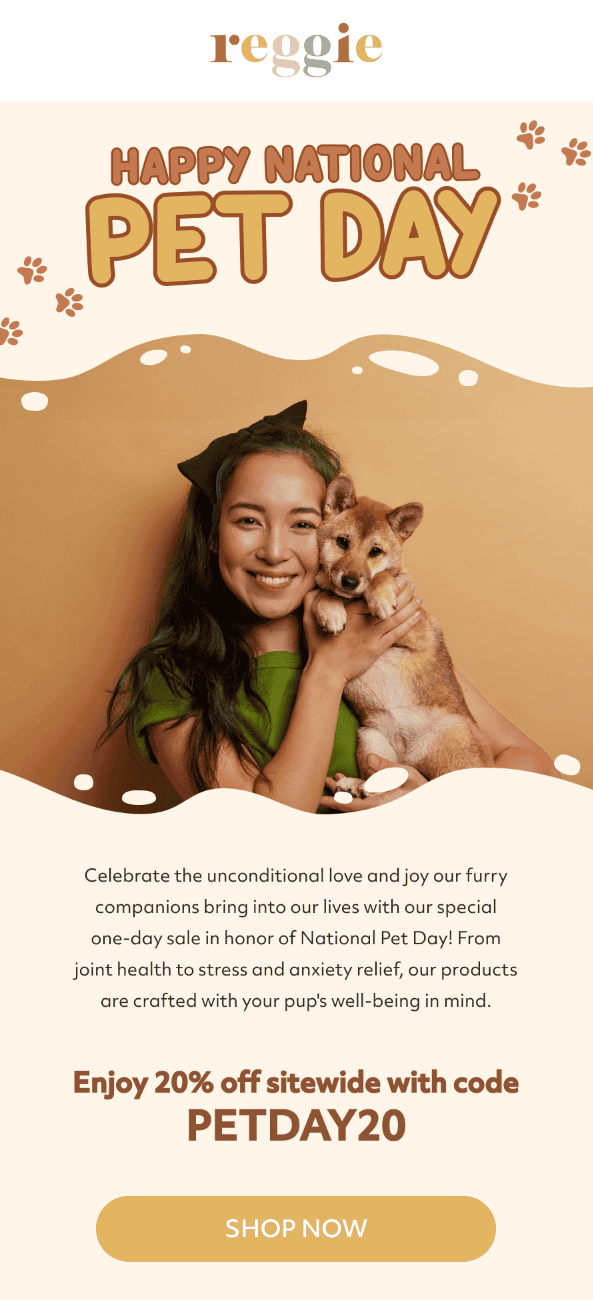
Pet content generates high engagement across industries because emotional bonds with pets, whether feline or canine, create powerful marketing moments.
Who should take part in National Pet Day?
Obviously, pet food, supplies, veterinary services, grooming, and pet insurance brands should participate in National Pet Day. But the marketing moment goes far beyond obvious players.
- Retail brands can create pet-friendly product collections, pet accessories, or matching pet-and-owner apparel.
- Real estate and housing companies can highlight pet-friendly properties or provide moving-with-pets resources.
- Hospitality and travel brands can showcase pet-friendly accommodations and destinations with practical travel tips.
- Technology companies can promote pet cameras, smart feeders, or pet-related apps.
- Home goods brands can feature pet-safe cleaning products or organization solutions for pet supplies.
- Even B2B brands can participate through workplace culture content about office pets, pet-friendly policies, or work-from-home life with animals.
For specific campaign ideas, there are a lot to choose from.
Run a pet spotlight series that features customer or employee pets alongside your product.

Create “pet of the week” emails as a lead-up to National Pet Day, with heartwarming stories about pets and their owners or even how they use your products.
It’s also an opportune time for user-generated content campaigns. Encourage your customers to share pet pictures, run caption contests with prizes, or create polls where people can vote for the cutest or funniest pet entries.
Support a good cause by partnering with animal shelters or rescue organizations. Promote adoption drives, volunteer opportunities, or fostering programs.
This shows that you care about the community and builds good will in your audience.
Lastly, don’t forget educational content such as pet safety primers that are relevant to spring (outdoor hazards, etc).

Provide advice from veterinarians and animal trainers. Create guides on pet health and wellness to position your brand as a helpful resource.
No matter what type of newsletter you choose, it’s bound to succeed because pet content has universal emotional appeal and high social sharing potential, and most importantly, is a way to humanize your brand and build community.
Want more ideas and inspiration like these? Check out our email swipe file with over 100 newsletter ideas you can use for your next campaign.
World Health Day (April 7)
World Health Day is a health awareness event celebrated annually on April 7. Every year, the WHO sets a theme for the year (sometimes a health topic or health concern).
No matter what the messaging is for the year, they usually touch on global health access and systemic health issues. So, World Health Day is also an opportunity for brands to show social responsibility, no matter what their industry is.
The most obvious fit for World Health Day newsletters are healthcare, medical, wellness, fitness, and nutrition brands.

However, you can go beyond that to showcase your company’s workplace health initiatives. Any brand with a genuine health-related commitment or impact can take part in this observation.
Here are just some email campaign ideas to consider for World Health Day.
- Explain the year's WHO theme and its importance
- Show health statistics and global health challenges
- Share resources for subscribers to learn more
- Interview experts to ask their perspectives on health access and equity
- Partner with health-focused nonprofits
- Match donations for health organizations
- Promote health-supporting products and donate a portion of the proceeds
- Highlight employee health benefits and support programs
- Show the impact and results of your workplace wellness programs
- Feature health-focused company policies (mental health days, healthcare coverage)
- Demonstrate your commitment beyond marketing
You can also conduct interviews with healthcare workers or public health experts, gather personal health journey stories from customers, and give actionable health tips relevant to your audience.

Infographics on global health stats and resources for health information or accessing healthcare will also be appreciated.
Lastly, you can integrate World Health Day newsletters with your Stress Awareness Month campaign, showing the connections between stress and physical health.
Share holistic wellness approaches and how stress can impact one's health.
Arbor Day (the last Friday of April)
Arbor Day deserves your marketing efforts for several reasons. It comes just on the heels of Earth Day but it has lower competition. People just don’t create campaigns for Arbor Day as much.
That’s a missed opportunity because Arbor Day’s specific focus (trees) is easier to make concrete actions for than the broad environmentalism of Earth Day.
Arbor Day is easy to create striking visual campaigns for because you can use anything with trees and nature imagery.
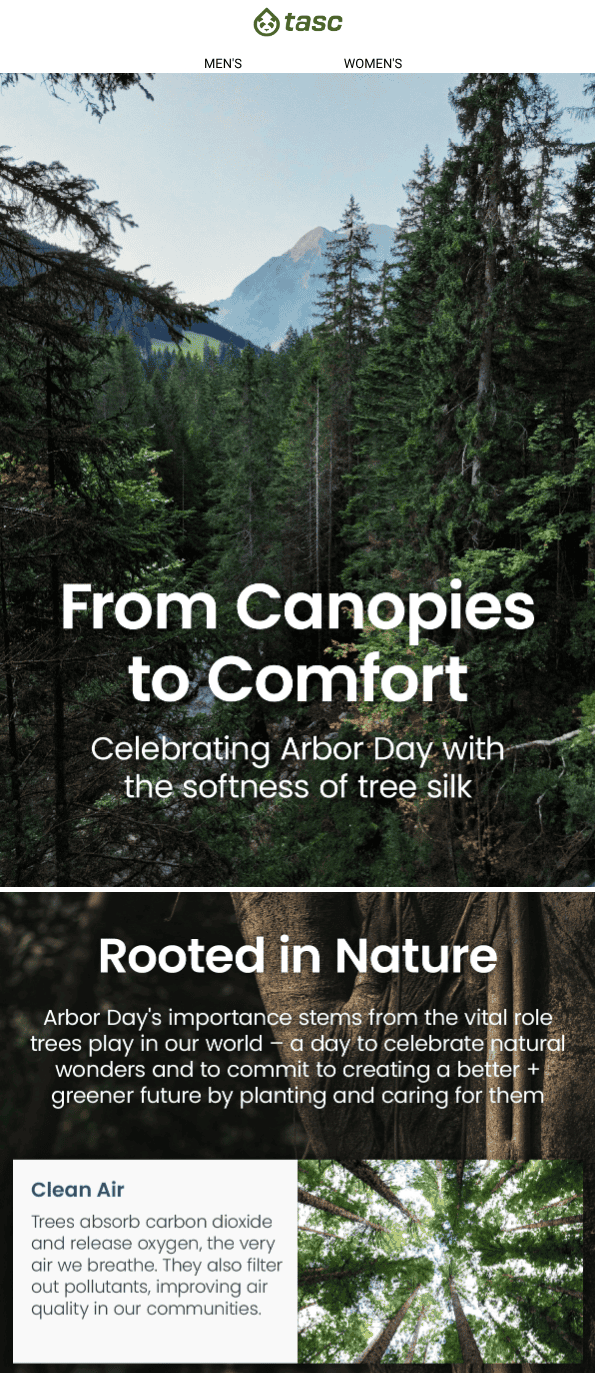
If you’re a nature, outdoor, lawn, or garden brand, you probably already run an Arbor Day newsletter every year.
But any company with environmental connections or reforestation initiatives can take part in this day.

Furniture or wood and paper product companies that highlight sustainability are a good fit for Arbor Day.
Here are some of the best newsletter ideas and campaign approaches you can try:
- Promote tree planting initiatives. Plante trees for purchases, subscriptions, or specific actions
- Partner with reforestation organizations
- Host local community tree planting events
- Track and report on the number of trees planted over time
- Publish information on tree benefits (air quality, ecosystem support)
- Create guides on how to plant and care for trees
- Highlight deforestation issues and solutions
- Show your sustainable forestry certifications, if any
- If you are a paper goods brand: show recycled content and responsible sourcing
- If you are an outdoor brand, show your link to forest conservation
- If you sell home goods, promote tree-derived materials and alternatives
You can also do a metaphorical narrative, such as "planting seeds" for business growth, growing “strong roots” as a brand or company, or “growing together” with your community or customers. You can even use “branching out” to launch new products or services on Arbor Day.
For a creative take on Arbor Day, look at this email below from Earth Runners, an adventure sandal brand. They connect trees with the grounding that someone feels with their footwear.

Step up your April newsletters today
The brands that succeed in April aren't those sending the most emails or shouting the loudest about spring sales; they're the ones demonstrating that they understand their audience's values, stresses, and passions.
But executing these strategies effectively requires understanding what's working across your industry and where competitors are focusing on versus what they're missing.
When you know what campaigns brands and competitorsrs are running year after year, you make smarter decisions faster without wasting resources on approaches that won't resonate with your specific audience.
Ready to discover what top brands are planning for April—and access the competitive intelligence that transforms good email marketing into campaigns your subscribers actually anticipate?
Sign up for Panoramata to track competitor email strategies in real-time, search thousands of campaign examples across industries, and find the creative inspiration that makes your April newsletters stand out while everyone else blends into spring monotony.
FAQs
Should my brand participate in Earth Day if we don't have strong environmental credentials?
You can participate authentically by amplifying environmental organizations without centering your brand, sharing educational content about environmental issues in your industry, or honestly acknowledging your sector's challenges while committing to genuine improvement starting now. Never pretend to environmental leadership you haven't earned, as greenwashing accusations cause far more reputational damage than environmental silence.
How do I know if April Fools' Day content is right for my brand?
Participate only if you have an established playful voice demonstrated year-round, operate in industries where humor is expected (entertainment, food, consumer products), and have creative resources for strong execution—otherwise skip it entirely. Healthcare, financial services, B2B enterprise software, and brands in crisis mode should avoid April Fools' content as humor undermines the credibility and trust these sectors require.
Can non-pet brands really benefit from National Pet Day campaigns?
Absolutely—retail, real estate, hospitality, technology, home goods, and even B2B brands successfully leverage National Pet Day through employee or customer pet spotlights, user-generated content campaigns, and charitable partnerships with animal shelters. Pet content generates exceptional engagement across industries because emotional bonds with animals create universal appeal and high social sharing potential.


